KZN Guardrail Theft Investigation Leads To Suspected Kingpin Arrest
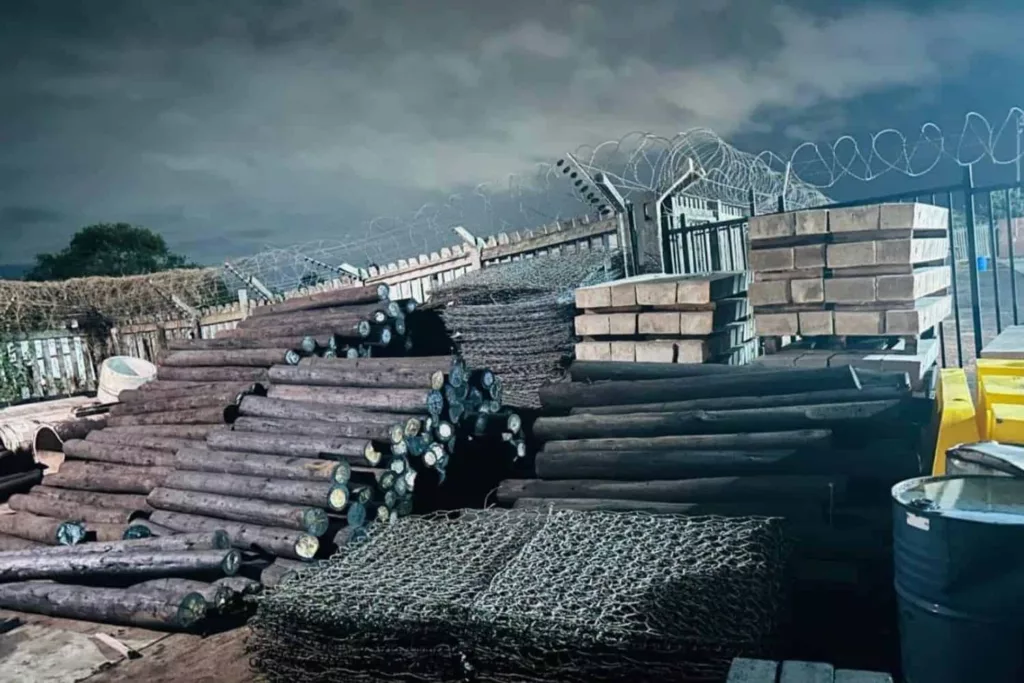
Arrest of suspected kingpin reveals major guardrail theft syndicate in KZN. Image: Supplied
A suspected kingpin linked to a syndicate allegedly stealing millions of rands’ worth of road guardrails has been arrested in Jacobs, Durban, as investigators probe possible links to contractors, departmental officials, tow-truck operators, and scrapyards.
The theft of road guardrails may seem like an infrastructure crime with a simple financial motive. But according to KwaZulu-Natal authorities, the consequences can be far more serious.
The province’s Department of Transport and Human Settlements says a suspected kingpin believed to be connected to a syndicate behind the theft of guardrails has been arrested in Jacobs.

The arrest follows an intelligence-driven investigation launched after authorities noticed that guardrails were repeatedly disappearing from KwaZulu-Natal’s extensive road network.
The department says the suspect allegedly owns a company and warehouse and was identified by alleged “runners” who were arrested the previous week.
The suspect remains in police custody.
Investigation Targets More Than Guardrail Theft
KwaZulu-Natal Transport and Human Settlements MEC Siboniso Duma said the investigation will go beyond identifying those allegedly involved in removing the barriers.
According to the department, investigators will examine whether there are possible links between the suspected kingpin and companies awarded contracts to replace guardrails.
They will also investigate possible connections with departmental employees, the tow-truck industry, and scrapyards.
That potentially broadens the investigation considerably.
If the allegations are substantiated, the issue would not simply concern theft from public infrastructure. It could raise questions about whether criminal networks have been able to exploit weaknesses within the systems responsible for awarding contracts, maintaining road infrastructure, and disposing of stolen material.
For now, however, those connections remain matters for investigators to establish.
More Than R500 Million Invested In Guardrails
The department says more than R500 million has been invested over the years in erecting and maintaining guardrails across KwaZulu-Natal’s road network, which stretches for more than 34,000 kilometres.
Authorities argue that removing the barriers creates a direct danger to motorists.
Guardrails and their end terminals are designed to help absorb the kinetic energy generated when vehicles leave the roadway. Their absence can therefore leave motorists exposed to more severe consequences when vehicles run off the road.
The department says its Road Traffic Inspectorate regularly encounters serious rollover crashes, particularly where vehicles leave roads and slide down embankments.
This is what makes the alleged theft particularly significant.
A stolen guardrail is not merely a piece of metal removed from public property. If it is missing when a motorist loses control of a vehicle, the consequences can potentially extend from financial loss to serious injury or death.
From Arrest To Accountability
The arrest was carried out following an intelligence-driven operation involving the department’s specialised security team and the SAPS Organised Crime Unit.
Authorities have described the arrest as the beginning of an effort to dismantle what Duma characterised as one of the largest criminal syndicates involved in guardrail theft in the province.
That claim will ultimately require evidence.
An arrest, even one involving an alleged syndicate leader, does not by itself establish the full structure of a criminal network. Nor does it prove that any contractor, government employee, tow-truck operator or scrapyard mentioned in the investigation has committed an offence.
Those relationships now form part of what investigators say they intend to establish.
The distinction matters because allegations can quickly become assumptions once a high-profile arrest has been made.
The Bigger Question Behind The Missing Guardrails
The immediate question is who allegedly stole the guardrails.
The more difficult questions concern how the alleged operation functioned over time.
How were stolen guardrails removed from a provincial road network spanning more than 34,000 kilometres without detection? Who purchased or processed the material? Were replacement contracts subsequently awarded in areas where barriers had been removed? And, if investigators find evidence of collusion, how far could such a network extend?
The Department of Transport and Human Settlements says these are precisely the questions now being investigated.
The answers could determine whether this case ultimately amounts to an infrastructure-theft prosecution involving a group of criminals — or exposes a much broader vulnerability within the province’s road-maintenance and procurement systems.
For motorists, there is an even more immediate question: how many missing guardrails remain on KwaZulu-Natal roads today, and what is being done to identify and replace them before another crash occurs?