EXPOSED: The Quiet End of Your Property Rights in South Africa Has Begun
Citizens Must Monitor These Bills To Protect Property Rights
South Africa is quietly moving toward a drastic erosion of private property rights. Legislation, not riots or upheaval, is slowly dismantling the foundation of land ownership—yet most citizens remain unaware.
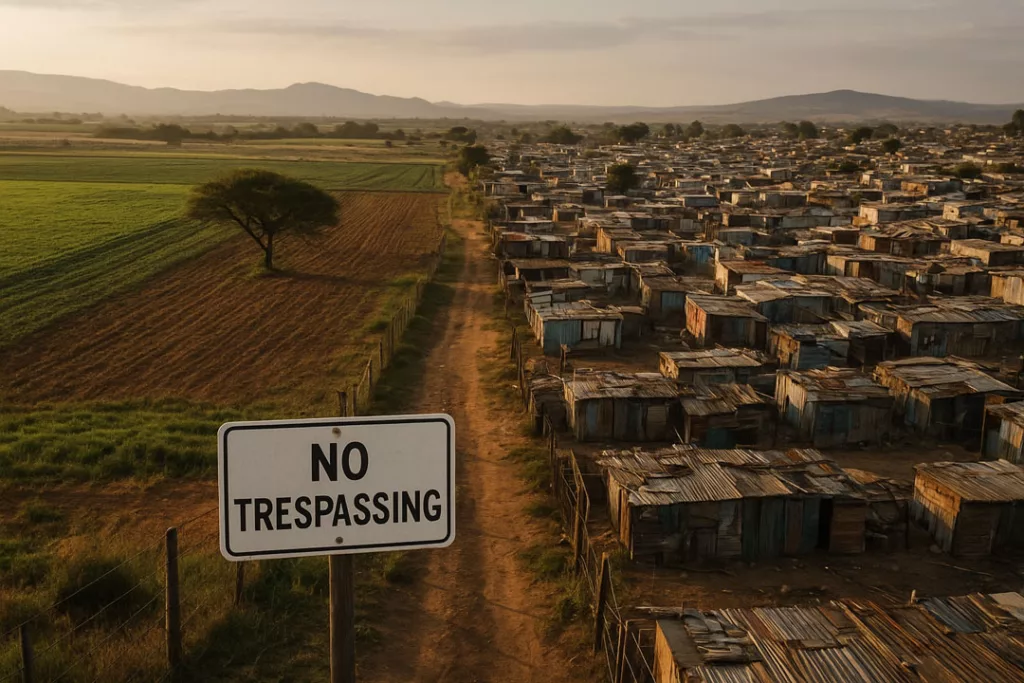
South Africa’s property landscape is being reshaped through a combination of laws and proposed Bills. The Prevention of Illegal Eviction (PIE) Act has made it nearly impossible for landowners to reclaim their property from unlawful occupation, allowing informal settlements to grow while legal battles drag on indefinitely.
Next, the Expropriation Act grants the state authority to seize land under “public interest” and introduces the concept of abandoned land, which can be claimed when owners fail to maintain control.

Parliamentary records reveal the government acknowledges resistance from landowners, particularly in the Western Cape, and plans to push new legislation: the Equitable Access to Land Bill and the Communal Land Tenure Bill. The former fast-tracks redistribution under vague criteria, while the latter replaces private ownership with state or traditional authority custodianship.
Viewed together, these laws form a pipeline: illegal occupation creates abandoned land, expropriation allows the state to claim it, redistribution reallocates it, and communal tenure ensures permanent state control.
This legislative approach aligns with the ANC’s National Democratic Revolution ideology, prioritizing centralised control over individual property. Historical precedents show that state custodianship of land leads to economic decline, stunted investment, and diminished personal freedom.
These developments are not speculative—they are documented legislative actions and parliamentary admissions. South Africans who value property rights and economic freedom must monitor these Bills closely before it becomes nearly impossible to reverse the erosion of land ownership.