Umhlali School Stabbing Raises Questions Over Police Warnings and Child Safety
A six-year-old girl was seriously injured in an alleged attack by a 16-year-old, renewing scrutiny of how authorities respond to threats of violence involving minors.
DURBAN, South Africa — October 19, 2026: A six-year-old girl is recovering in hospital after an alleged stabbing at a learning centre in Umhlali, KwaZulu-Natal, in a case that has raised serious questions about whether authorities acted decisively enough when confronted with earlier warning signs.
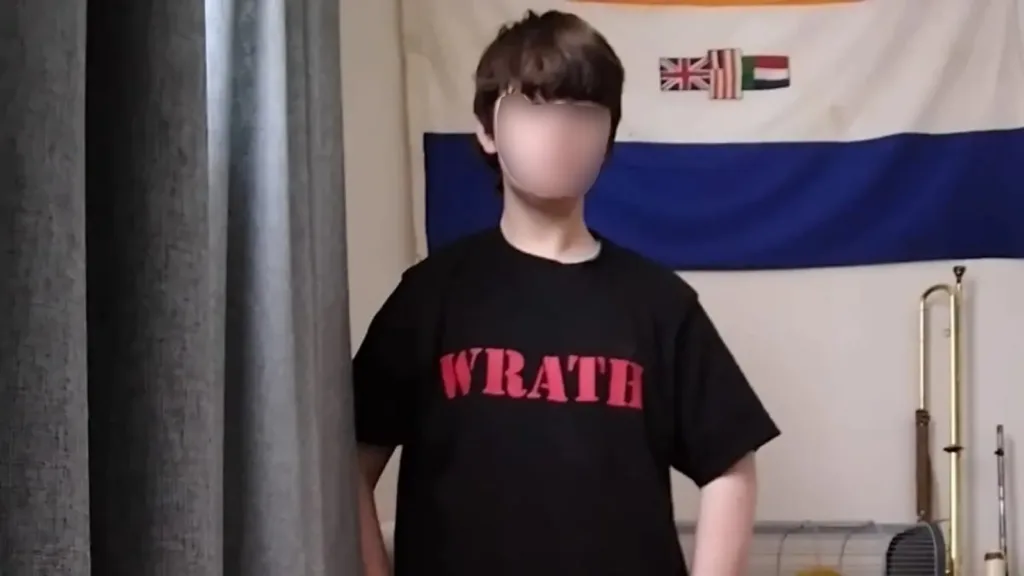
The 16-year-old suspect was arrested on October 13 after allegedly entering his former primary school and repeatedly stabbing the child. Reports indicate that the girl sustained several wounds and was last reported to be in a critical but stable condition.

The incident has renewed scrutiny of an earlier alleged bombing attempt at Ballito Junction Regional Mall, following which the teenager was reportedly released from custody and placed on probation.
The central question is no longer simply how a young person could allegedly progress from threatening behaviour to an attack on a child. It is whether the available warnings were properly assessed, investigated and acted upon before another child was placed in danger.
Earlier incident raises questions about intervention
According to reporting by Newsday, the teenager had allegedly attempted to plant an improvised explosive device in the food court of Ballito Junction Regional Mall. The device reportedly failed to detonate properly.
The subsequent school attack has brought renewed attention to the handling of that earlier incident and the decision not to keep the teenager in custody.
A report by the Sunday Times published on October 18 also raised questions about whether police had been alerted to threatening behaviour before the stabbing. The report said the National Prosecuting Authority had attributed the earlier case not being placed on the court roll to insufficient evidence, while a police insider disputed that explanation.
These accounts point to a matter requiring clear answers from the relevant authorities. What evidence was collected, what investigative steps were taken, and what factors informed the decisions made after the mall incident?
The public should not have to rely on conflicting accounts from unnamed sources to understand how a case involving an alleged explosive device was handled.
At the same time, the distinction between a failure to prosecute and a failure to assess risk is important. Insufficient evidence to secure a criminal conviction does not automatically establish that a suspect poses no danger. Nor does alarming behaviour, on its own, prove that a person will commit a violent crime.
The challenge for investigators and child-protection authorities is to assess the available evidence properly and determine what reasonable safeguards are necessary.
Online communities and the escalation of violent behaviour
Newsday reported that the teenager had participated in online communities associated with the glorification of serial killers and mass murderers.
A former acquaintance, identified by the publication under the pseudonym Max, alleged that people who knew the teenager had raised concerns about his behaviour as far back as 2024.
The acquaintance also described online interactions involving violent imagery, disturbing statements and admiration for perpetrators of mass attacks.
Such accounts require careful handling. Participation in an online subculture does not, by itself, establish criminal intent, and disturbing online expression cannot be treated as proof that every person involved will become violent.
However, when threats, alleged preparation for violence, access to weapons and a previous serious incident converge, the situation warrants a more considered response than dismissing the behaviour as attention-seeking.
The concern is not that young people should be punished for unconventional interests or online associations. It is that credible threats should be assessed on their evidence and potential consequences, irrespective of whether they emerge from a recognised extremist organisation or a loosely connected online group.
The internet can provide vulnerable teenagers with a sense of belonging, but it can also expose them to communities that normalise violence, encourage increasingly extreme behaviour or exploit their vulnerabilities.
Parents, schools, online platforms and law enforcement all have roles to play. Their responsibilities differ, but none should assume that another party has dealt with a credible threat without verifying it.
Were the warning signs properly assessed?
Forensic psychologist Gérard Labuschagne has questioned the handling of the earlier incident. According to Newsday, he argued that the teenager’s behaviour and the material reportedly circulated before the mall incident warranted a formal assessment of the risk of violence.
A structured assessment could help identify potential targets, possible escalation, access to weapons and appropriate safeguards. It would not guarantee that an attack could be prevented, but it could inform decisions about supervision, intervention and public safety.
The case also raises questions about how reports from members of the public are received. Newsday’s source alleged that attempts to report further concerning behaviour encountered obstacles because the alleged victim was expected to open a police case herself.
That allegation deserves clarification from the police. Authorities should explain what reporting procedures apply when third parties disclose credible threats, particularly where the potential victim is a minor or may be vulnerable.
A reporting system that discourages people from sharing relevant information risks losing opportunities to intervene before violence occurs.
There must also be accountability for decisions made by officials, but accountability should follow an evidence-based investigation rather than assumptions about individual culpability.
A child should not become the measure of institutional failure
The most immediate consequence of this case is the harm suffered by a six-year-old girl and the fear experienced by her family, classmates and educators.
The circumstances also raise broader questions about how South Africa manages young suspects who may present a risk to others while remaining children under the law.
A juvenile justice system must balance the rights of minors, rehabilitation and public protection. These objectives are not mutually exclusive. Proper risk assessment, appropriate supervision and evidence-based intervention can support rehabilitation while reducing the likelihood of further harm.
What matters now is whether the relevant institutions can account for the decisions made before the attack, identify any procedural shortcomings and explain what corrective action will follow.
The teenager’s age does not remove the need for accountability, just as the seriousness of the allegations does not remove his legal rights. The investigation must establish the facts, and the justice process must proceed on that basis.
The public also deserves clarity on whether the earlier incident was investigated fully, whether appropriate risk assessments were considered, and whether communication between the police, prosecutors and other relevant bodies was adequate.
The questions South Africa cannot ignore
The attack in Umhlali should prompt more than expressions of outrage. It should lead to a documented examination of what was known, when it became known, and what officials did in response.
If credible warnings were ignored, the public deserves to know why. If investigators lacked sufficient evidence to prosecute the earlier incident, the authorities should explain what further investigative options were considered. If the available safeguards were inadequate, the system needs to address those shortcomings.
Above all, the outcome should not be another investigation that produces statements but no measurable change.
How many warning signs must be documented before institutions coordinate an effective response? And will the investigation into this case establish where the system fell short, or will responsibility once again disappear between agencies?