The Jaundiced Emptiness of Decoloniality
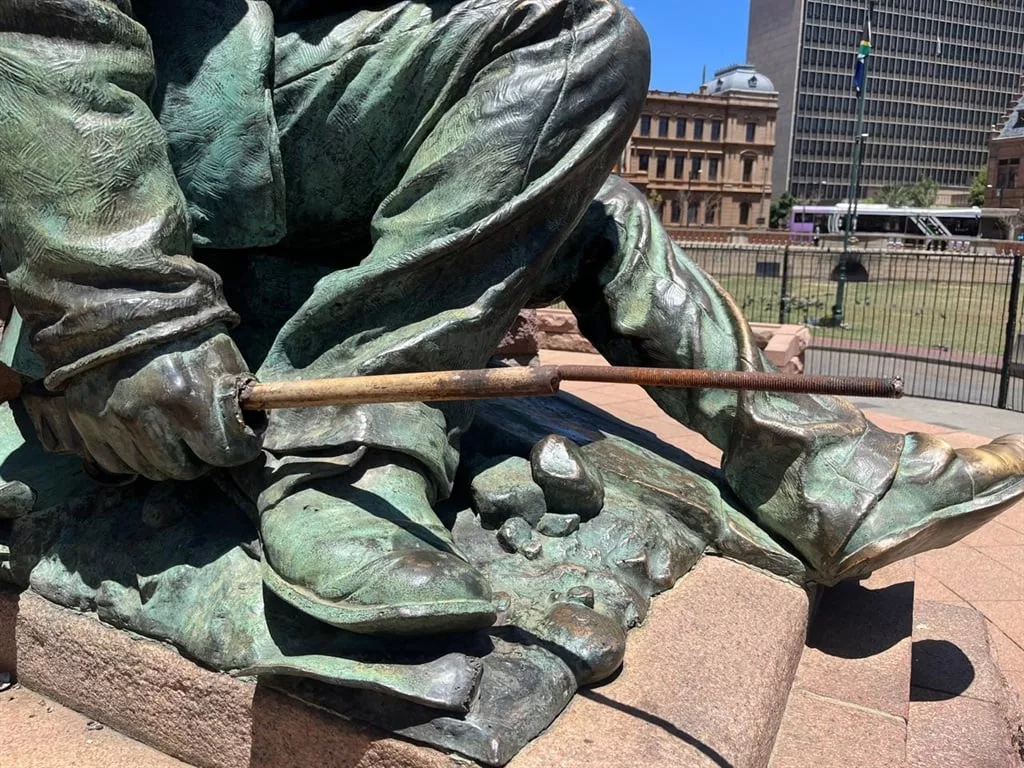
With his belief that South African history began only in 1994, Julius Malema would endorse Professor Dasarath Chetty’s view that in order to cleanse and deodorise the present, reminders of the past in the form of statues and monuments should be toppled and removed (POST, October 1-6).
Given his academic mooring as a sociologist, it is puzzling that by advocating the erasure of reminders of past eras, Chetty does not appreciate that such action erases a sense of identity. For it is only against the past that an identity can be profiled and understood. Every week POST newspaper carries articles celebrating the lives of individuals whose achievements are a measure of how they navigated the difficulties of the past.
Progress cannot be gauged without antecedents. The removal of all optical relics erected in South Africa before 1994 would diminish, if not cancel, the meaning of liberation since 1994. If in that historical limbo, new statues and monuments were erected to celebrate the role of those who brought liberation, what people had been liberated from would be a blank page.

Nothing has meaning without context. George Orwell illustrated that when he said history stopped when every record and statue had been rewritten or removed. Nothing would exist except the endless present.
What is particularly deplorable about Chetty’s perspective is that it is completely lacking in objectivity. He is dead wrong in claiming that indigenous languages were suppressed in South Africa. In 1861, Bishop Colenso published the first English-Zulu dictionary and translated the New Testament into Zulu. Natal magistrate James Stuart built up an archive of African oral history over a lengthy period from the 1890s, painstakingly filling hundreds of notebooks with reminiscences and interpretations of traditions, which are not only a unique and invaluable mirror of the past but an archive preserving Zulu culture.
Whatever one wants to say about apartheid, the cornerstone of the Bantustan system provided for the nurturing and propagation of the various African languages and cultures. In that vein, Chetty’s completely negative view of the past cannot be allowed to pass unchallenged. Even the most jaundiced proponent of what he terms ‘decoloniality’ should acknowledge that before 1994, benefits were derived from the introduction of the wheel and Christianity, the ending of slavery, better forms of clothing, medicine and infrastructure, paper and writing.
Chetty’s deprecation of the legacy of colonial borders has no basis because, with the exception of Eritrea, the spatial integrity and borders inherited from colonialism have been jealously maintained by every African state.
What is missing from his ‘decoloniality’ is what his ilk would enshrine in its place. Having sanitised the minds of the formerly oppressed, how do the corrupt, dysfunctional despotisms that rule liberated Africa qualify for statues and monuments? How is their legacy liberating?
The past cannot be altered, but its stains, records and relics serve as stepping stones to the present. With the exception of the Malemas of this world, most people look to the past for identity, understanding, and,where appropriate, appreciation. For many, it’s a smorgasbord of heritage. But as for those who see only darkness and oppression in the past and exploit it to propagate hate, they are best disdained and ignored.