Only Major Surgery Can Fix Durban
Former Durban City Councillor colleague, Mark Lowe’s comprehensive survey of Durban’s collapse under the ANC and its co-opted one-seat party allies merits accolades (The Mercury, May 28).
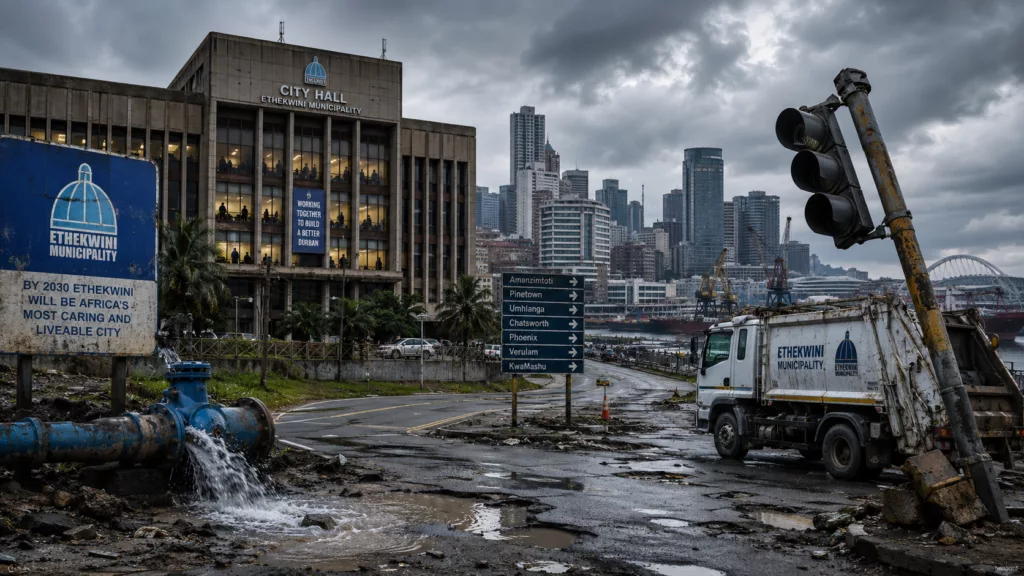
Whereas the only part of the national government that functions properly is SARS, governance of eThekwini is so depleted that the treasury is unable to rake in the millions owed by councillors, staff and state entities. With very few exceptions, the state of eThekwini Metro is marked by neglect, indifference, decay and rapidly growing dystopia.
However, it is difficult to concur with Mark Lowe’s optimism that the forthcoming elections may provide the panacea necessary to halt and then reverse the rot which the city manager describes as ‘transformation.’

Irrespective of which party or coalition of parties gains a majority in the election, they will face the granite wall of embedded cadres and officials who are responsible for the collapse of Durban. Underpinning this unelected phalanx are the trade unions. Their only concern for ratepayers and residents is that they continue contributing ever higher taxes and tariffs to finance waste and “irregular spending” – a euphemism for looting.
There is no quick fix for Durban. That is the harsh reality. Instead, what is required is major surgery – a fundamental reset of local government in what is called eThekwini municipality, because as an entity it is too large and disparate to function in an acceptable manner. That means dismembering it and returning to localised municipal governance, which would see areas such as Amanzimtoti, Pinetown, Umhlanga, Chatsworth, KwaMashu, Phoenix, Verulam, Umkomaas and other nodes taking care of their own needs.
Instead of each node having its own units servicing its infrastructure, those services would need to be outsourced to private suppliers for maintenance, thereby saving millions in staffing, vehicles and equipment.
As for the nest of officials ensconced in City Hall, they should all be subjected to a review board comprising experts in every field – water and sanitation, electricity, health, finance, town planning, roads, traffic, etc. Using a utilitarian approach for the core needs of what would remain of Durban, that bloated staff could be drastically reduced.
At the same time, the costly and loss-making entities of UShaka, Moses Mabhida, the ICC and the Transport unit should be privatized.
The Metro idea was a colossal mistake. Sold as a means of economising local governance by collectivising resources, it has proved a joy for the Marxists of the ANC because it has succeeded in redistributing resources to the detriment of those who actually pay for them. Moreover, it has proved a haven of employment for the unqualified, politically connected and a cash cow for the looters.