Podcasts Under Fire: Regulation, Power, and the State’s Growing Appetite for Control
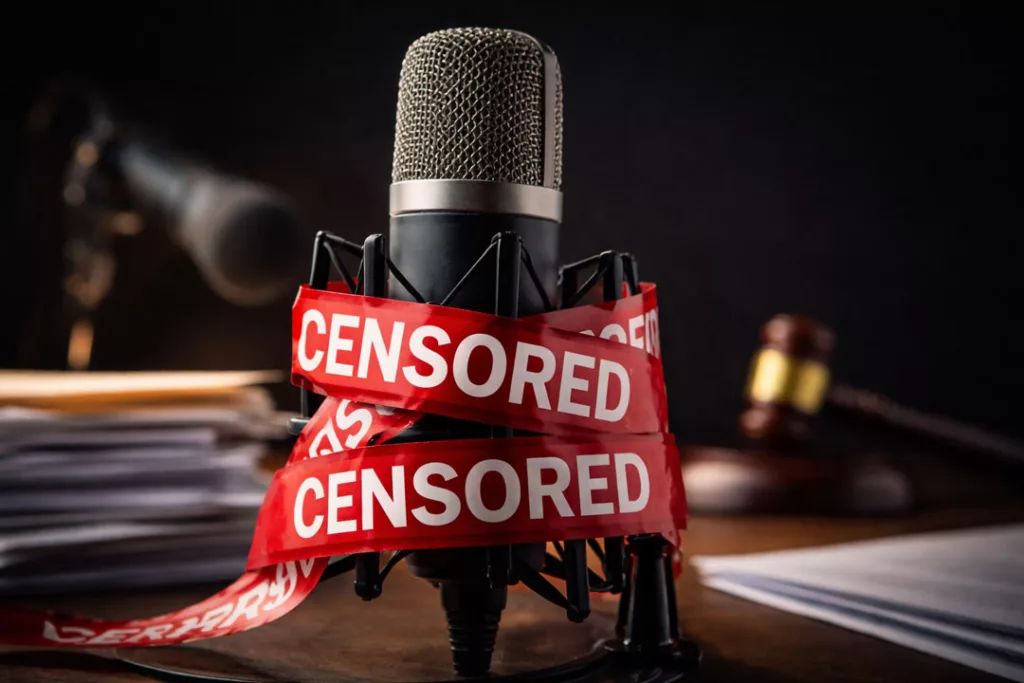
Podcast Regulation Signals Broader Control Over Digital Speech
When governments begin circling independent media under the banner of “online safety,” history suggests the motive is rarely protection—it is positioning. South Africa’s latest push to regulate podcasts and online audio content follows a familiar pattern: declining trust, weakening narrative control, and a ruling party increasingly intolerant of spaces it cannot manage.
The issue is not whether laws should exist. The issue is why new regulatory machinery is suddenly required for a medium that has become politically inconvenient.
The Official Narrative vs the Strategic Reality
The ANC-led government insists that regulating podcasts is about modernising outdated legislation, aligning digital media with broadcast standards, and safeguarding constitutional values such as dignity and privacy. This is presented as a neutral administrative update to the Broadcasting Act (1999) and Electronic Communications Act (2005).

However, policy intent cannot be assessed in isolation from the political context.
South Africa already possesses robust legal instruments addressing:
- Defamation
- Harassment and intimidation
- Incitement to violence
- Existing and expanding hate speech provisions
These laws apply universally—to citizens, publishers, journalists, and digital creators alike. The claim that podcasts represent a legal vacuum is, therefore, misleading. What they represent is a regulatory vacuum—a space where the state lacks procedural leverage.
And that distinction matters.
Why Podcasts Are a Problem for Power
Podcasts have flourished precisely because they bypass:
- Editorial gatekeeping
- Licensing regimes
- Political pressure via regulators
- Advertising and state-aligned funding dependencies
They operate as digital publishing, not broadcasting. There is no public spectrum, no scarcity, no state-owned infrastructure. Anyone with a microphone can participate—and that decentralisation is the threat.
As alternative media grows, traditional broadcasters lose influence. As traditional broadcasters lose influence, political actors lose message discipline. The result is predictable: regulation follows relevance.
This is not about content volume. It is about control of narrative velocity.
International Comparison — What Democracies Actually Do
Globally, podcasts are not regulated as broadcasters in mature democracies:
- United States: Podcasts fall under First Amendment protections. No federal licensing, no broadcast-style complaints regime. Liability is handled through existing civil and criminal law.
- United Kingdom: Ofcom does not regulate podcasts as broadcast media. Only content hosted by licensed broadcasters falls under its remit.
- European Union: Podcasts are treated as on-demand digital services. Regulation focuses on platforms, not individual creators, and avoids pre-emptive content control.
- Australia & Canada: Podcasts remain largely unregulated as speech-based digital publishing, with emphasis on post-publication legal remedies—not licensing.
The international norm is clear: speech first, regulation last.
South Africa’s approach moves in the opposite direction—toward pre-emptive oversight, complaints expansion, and administrative intervention.
That is not aligned with global best practice. It is divergence.
The Real Risk: Bureaucratic Censorship
The most dangerous form of censorship is not overt bans—it is procedural exhaustion.
Expanding broadcast-style complaints systems to podcasts introduces:
- Vague definitions of “harmful content”
- Politically motivated complaints
- Administrative burdens for small creators
- Legal intimidation without judicial findings
The predictable outcome is self-censorship. Not because creators are wrong—but because resistance becomes unsustainable.
This does not silence everyone. It selectively silences the most critical, controversial, and independent voices while rewarding the safest and most compliant.
That is not accountability. It is narrative filtering.
Local Content Quotas — Culture as Compliance
The proposal to impose local content quotas and licensing requirements on large streaming platforms is framed as economic empowerment. On paper, it sounds defensible.
In reality, South Africans understand the pattern:
- Funding routed through politically influenced structures
- Creative output reduced to transformation checklists
- Ideology creeping into entertainment and storytelling
- Compliance rewarded over quality
Internationally, content quotas exist—but they are typically industry-driven, transparent, and arms-length from political control. South Africa’s track record with state-managed funds offers little reassurance.
Creativity does not thrive under bureaucratic supervision. It survives despite it.
Credibility Deficit — The Trust Problem
This entire proposal rests on one assumption: trust.
Trust in institutions that have failed to:
- Maintain the electricity supply
- Protect public infrastructure
- Prevent state capture
- Deliver basic municipal services
Yet these same institutions now argue they are best positioned to regulate speech, creativity, and public discourse.
That contradiction is impossible to ignore.
The Bigger Picture — This Does Not Stop at Podcasts
Once digital creators are folded into regulatory frameworks, the scope expands:
- Livestream commentary
- Political satire
- Independent documentaries
- Citizen journalism
Regulatory logic is cumulative. Power, once granted, is rarely surrendered.
The state already has the tools to act against real harm. What it seeks now is structural leverage over inconvenient speech.
Control Masquerading as Care
This is not a debate about safety. It is a debate about authority.
Podcasts have become influential because they are uncontrolled. That independence exposes failures, challenges narratives, and disrupts political comfort. Regulation is the response—not because harm has increased, but because criticism has.
The question South Africans must confront is simple but uncomfortable:
Is this about protecting citizens from harm—or protecting those in power from scrutiny?