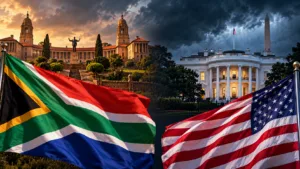
Taiwan Joins Trade War With South Africa As US Tariffs Kick Off Today — Tech Sector in Huge Trouble

South Africa Faces New Crisis as Taiwan Halts Critical Chip Exports in Retaliation for ANC’s Taiwan Downgrade
US tariffs on SA kick in TODAY — but here’s what the media isn’t telling you: Taiwan is now joining the trade war too. South Africa’s tech sector could be in serious danger as Taiwan withholds semiconductors. This could be bigger than the US sanctions.
South Africa’s economic woes are deepening. As of today, the United States has officially imposed a punitive 30% tariff on South African goods. But another more targeted, and potentially more devastating, move is unfolding almost unnoticed — Taiwan has entered the trade war arena, reportedly considering curbs on semiconductor exports to South Africa.
This diplomatic collision was set off after South Africa unilaterally downgraded Taiwan’s representative offices, in alignment with Beijing’s “One China” policy. The ANC’s decision — described by Taipei as crude and politically motivated — has now provoked one of South Africa’s most important technology partners.

Taiwan’s dominance in the global chip market is absolute. While China and South Korea supply low-end chips, Taiwan accounts for 95% of the world’s most advanced semiconductors — the kind used in AI, high-performance computing, and leading-edge tech. These chips are vital for any country with digital ambitions, and South Africa’s burgeoning tech sector stands directly in the crosshairs.
With over 50 tech companies listed in the Financial Times 2025 ranking of Africa’s fastest-growing firms, South Africa has been leading Africa’s digital revolution. But without high-end Taiwanese chips, those gains could be erased.
Even more concerning is Taiwan’s alignment with Washington’s economic retaliation. This is not just a diplomatic snub — it is a strategic squeeze. South Korea, another key chip supplier and US ally, could follow suit. In short, South Africa risks being shut out of the global tech supply chain.
The ANC’s foreign policy — cloaked in non-alignment rhetoric but visibly leaning toward Beijing and Moscow — is isolating Pretoria from its Western trading partners. The result is economic suicide dressed up as ideological loyalty.
In contrast, nations like Japan, the UK, and the EU negotiated their exposure to US tariffs down to 15–20%. South Africa, however, now faces the full brunt of the 30% hike, without any diplomatic gains to show for it.
South African officials claim the renaming of Taiwan’s offices was standard practice. Yet Taipei sees it as a clear break from a 1997 bilateral agreement, an act of submission to Beijing, and a rejection of years of cooperation.
Taiwan’s message is clear: if South Africa can downgrade its allies at China’s request, it will pay the price — not in words, but in silicon. For a country relying on digital transformation to generate jobs and economic growth, this is a critical loss.
The Democratic Alliance has condemned the ANC’s stance as “economic suicide,” calling on Minister Ronald Lamola to urgently revisit the foreign policy disaster. According to the DA, South Africa’s automotive industry alone — which relies heavily on chip imports — could face billions in export losses.
Pretoria is now boxed into a corner. Its defiant diplomacy with the US, and outright disregard for Taiwan’s importance, has left South Africa without exemptions, without leverage, and now, without chips.
The cost of arrogance is high — and it’s being billed directly to the South African economy. As the dust settles, the question is no longer whether a trade war exists, but whether South Africa has already lost it.